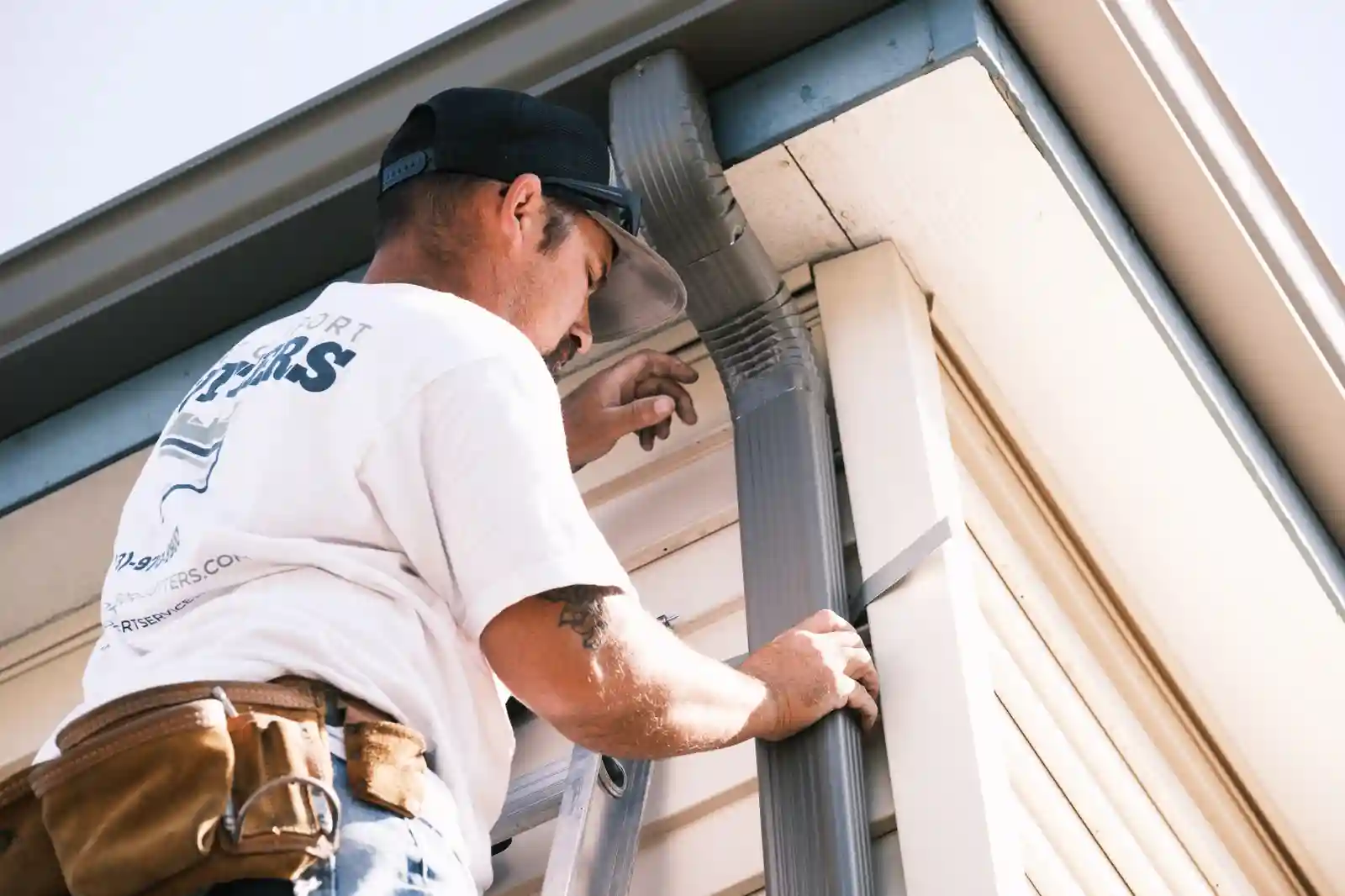
Gutters don't cause ice dams, but they take most of the damage. Before winter, clear the gutters after the leaves are down, fix loose hangers and leaking seams, check the fascia for soft wood, and find out why your attic is warm enough to melt roof snow. If ice has already damaged your system, gutter repairs run $100 to $900, scoped and delivered as one flat price. Rotted wood or composite fascia replaced behind the gutter runs $20 to $35 per linear foot. The number we give you is the number on the invoice.
That's the answer. The rest of this guide covers what winter damage costs to fix, how an ice dam actually forms, what ice does to each part of a gutter system, and why Colorado conditions make it worse. It also covers what to do before the first storm, where heat cable fits, and when gutters aren't the problem at all. It reflects how our gutter repair crews handle winter damage across the Front Range, from heavy snow country in Evergreen to the windy foothills edge in Golden and Boulder.
What fixing winter gutter damage costs
| Work | How it's priced | Published range |
|---|---|---|
| Gutter repair, any repair | Time, materials, and markup, delivered as one flat price | $100 to $900 |
| Wood or composite soffit and fascia replacement | Per linear foot, scoped to what failed | $20 to $35 per linear foot |
| New 5-inch K-style seamless aluminum gutters | Per linear foot, delivered as one flat price | $8 to $15 per linear foot |
| Typical full gutter replacement | Same method, whole home | $2,500 to $3,500 |
| Pre-winter gutter cleaning | By home size, roof pitch, and roof elevation, one flat price | $200 to $350 |
Repair cost depends on what failed and how far it spread, so we don't publish prices by repair type. We look at the system, scope the fix, and give you one number before work starts. When a repair would land above that range, replacement is usually the better value, and we'll tell you which side of the line you're on.
How an ice dam actually forms
The common answer is that clogged gutters cause ice dams. That's incomplete.
An ice dam starts in the attic. Heat escaping from the living space warms the roof deck. Snow on the upper roof melts from underneath, even when the air outside is well below freezing. That meltwater runs down the roof until it reaches the eave, which hangs past the warm walls and sits at outdoor temperature. There it refreezes.
Each melt adds another layer. The ridge of ice grows along the roof edge and into the gutter. Meltwater coming down behind it has nowhere to go, so it pools. Then it backs up under the shingles and behind the fascia board.
So the root cause is heat loss and ventilation. ENERGY STAR and the U.S. Department of Energy both point to air sealing and attic insulation as the main fixes. Soffit vents matter too, because they're the intake side of attic airflow. Our soffit and fascia page covers how blocked soffit vents feed the problem.
Where gutters come in: a gutter packed with leaves or needles holds water and freezes solid first. That gives the dam a head start and a heavier anchor. Clean gutters won't stop an ice dam on a poorly ventilated roof. Full gutters make a bad one worse.
What ice does to each part of your gutters
| Part | What ice does | What you see later |
|---|---|---|
| Hangers | Carry the weight of a gutter full of ice plus snow sliding off the roof | Sagging runs, gutters pulling off the fascia |
| Seams and corners | Water in a joint freezes, expands, and opens the gap a little each cycle | Drips at corners and end caps in spring |
| Pitch | Weight bends the run so it holds water | Standing water, more ice next winter |
| Fascia | Backed up meltwater soaks the board the gutter mounts to | Peeling paint, soft wood, gutters that won't stay attached |
| Downspouts | Water left in an elbow freezes and splits the seam | Leaks at the elbow, water dumping at the wall |
The fascia is the one that costs the most. Your gutters hang on it. Once it goes soft, a fastener won't hold, and the gutter starts pulling away. When we replace fascia, the gutters come off and are replaced too, except in unusual circumstances. A leak at a seam in October can turn into rotted fascia by spring.
Why Colorado is harder on gutters in winter
Freeze-thaw at 5,280 feet. Denver crosses the freezing point over and over through the cold season, often in a single day. Strong winter sun at altitude melts snow on the roof by early afternoon. It refreezes at the eave by dusk. That daily cycle builds ice faster than a steady cold winter would.
South and west faces melt first. Sunny roof planes shed meltwater onto shaded eaves and gutters on the cold side of the house. Ice often builds on the north side even when the south roof looks clear.
Heavy spring snow. March and April storms drop wet, heavy snow. It loads gutters that are already stressed from the winter and slides off upper roofs onto lower runs.
Foothills snow load. Evergreen sits at roughly 7,000 feet and gets far more snow than the metro below. Golden and Boulder add strong downslope winds that work hangers loose and pull at joints. A system that holds fine in Aurora can fail here.
Expansive clay soils. Much of the Front Range sits on clay that swells when wet and shrinks when dry. When a gutter is iced over or torn loose, spring meltwater dumps straight at the foundation, right when the ground is already saturated.
What to do before the first big storm
| Task | Why it matters | Who should do it |
|---|---|---|
| Clean gutters after full leaf drop | Empty troughs don't freeze into a solid block | You on a one-story home, a crew on anything taller |
| Clear downspouts and elbows | A blocked elbow freezes and splits | Part of a complete cleaning |
| Fix loose hangers and leaking seams | Winter weight and freeze-thaw make small failures big | Repair crew |
| Check the fascia for soft spots | Soft wood fails under ice load | Crew inspection, or poke it with a screwdriver from a safe ladder |
| Confirm downspouts discharge away from the house | Meltwater should not soak clay at the foundation | You can check this from the ground |
| Look at attic insulation and soffit vents | This is what actually prevents ice dams | An insulation or ventilation pro for the attic; soffit vents are part of soffit and fascia work |
Timing matters. Clean after the leaves are fully down and before the ground freezes. A cleaning at half leaf drop means the gutters go into winter full anyway. Our gutter cleaning page has an instant quote if that's the piece you're missing.
Get Your Free Repair Estimate
Tell us what winter did to your gutters and get one flat price before any work starts.
Heat cable and heated gutter guards, honestly
Heat cable runs in a zigzag along the roof edge and inside the gutter and downspouts. It keeps a channel open so meltwater can drain instead of backing up. We install heat cable where it fits the home.
What it is: a way to manage ice on a roof that's prone to it. What it isn't: a fix for a warm attic. If heat is pouring out of your ceiling, cable treats the symptom. It also has to be laid out right, or the ice simply forms just past where the cable ends.
You'll also see "heated gutter guards" advertised. The guards we install are stainless steel mesh, aluminum, and plastic mesh, and none of them prevent ice dams. Metal guards handle snow load and freeze-thaw better than plastic and let meltwater drain through, which helps. But guards don't address attic heat. If ice is your problem, ask about heat cable and ventilation, not guards.
If you think heat cable belongs on your roof, ask us about it.
Signs of ice dam damage you can spot from the ground
- A thick ridge of ice along the roof edge, with icicles hanging from the gutter and fascia rather than just the gutter lip
- Icicles on the north or shaded side while the rest of the roof is clear
- Gutters sagging, tilted outward, or pulling away from the board
- Water stains or peeling paint on the soffit and fascia
- Stains at the top of interior exterior walls or ceiling corners
- Drips at corners and end caps once things thaw
- Downspouts with water spraying from an elbow seam
Check again after the spring thaw. A lot of winter damage only shows up when the ice is gone.
DIY vs. calling a pro
Some pre-winter work is reasonable to do yourself. Cleaning a single-story gutter, checking where downspouts drain, and pulling snow off the lower roof with a roof rake while standing on the ground are all fine.
What you shouldn't do: climb onto an icy roof, hack at an ice dam with a hammer or chisel, or pull icicles off a gutter. Chipping ice cracks shingles and dents or tears the gutter you're trying to save. Hanging off a ladder on frozen ground is how winter falls happen. Our own crews wait until ice has thawed on both the roof and the ground before they climb, for ladder safety and to protect your roof.
The other gap is diagnosis. A homeowner sees a sagging gutter. A crew sees whether the hangers failed, the pitch is off, or the fascia behind it went soft. Those are different fixes at different prices.
What waiting costs
Ice damage compounds. A loose hanger lets a run sag. The sagging run holds water. That water freezes and adds weight. By spring the gutter is pulling off a fascia board that's been wet all winter.
At that point you're past a repair in the $100 to $900 range. You're into fascia replacement at $20 to $35 per linear foot, and because the gutters come off with the fascia, often a new system too. A typical full replacement runs $2,500 to $3,500. Meltwater that missed the gutter also ends up at the foundation, which is the most expensive place water can go on Front Range clay.
When gutters aren't the answer
The attic is the problem. If your roof builds ice every winter, new gutters won't stop it. The fix is insulation and air sealing in the attic. On the outside of the house, we can address the soffit, the fascia, and the gutters.
It's mid-winter and everything is iced. We work year-round, but we wait for a thaw before climbing. If a run has torn loose and is hanging, call. We offer residential emergency gutter repair and will tell you honestly whether it's a now job or a wait-for-a-thaw job.
The system has already failed. If gutters have been pulled off by snow and ice more than once, the fix is often stepping up from aluminum to steel and adding more hidden hangers. That's replacement, not repair. See gutter installation for materials and sizing.
You're counting on a warranty. Our two-year workmanship warranty covers defects in our installation and labor. It does not cover damage from ice dams, hail, wind, or other weather. That's one more reason to fix the cause before winter.
Why Colorado homeowners call Fort Comfort Gutters for winter damage
The number we give you is the number on the invoice. We scope the repair, give you one flat price, and that's what you pay. No revised total once the crew sees the roof.
Crews inspect while they're up there. On a winter repair, that means hangers, seams, pitch, downspouts, and the fascia behind the gutter. If we find hidden damage, we stop work on that section, show you, and go over your options before going further.
We give honest repair versus replace assessments. If a repair will hold, we'll quote the repair.