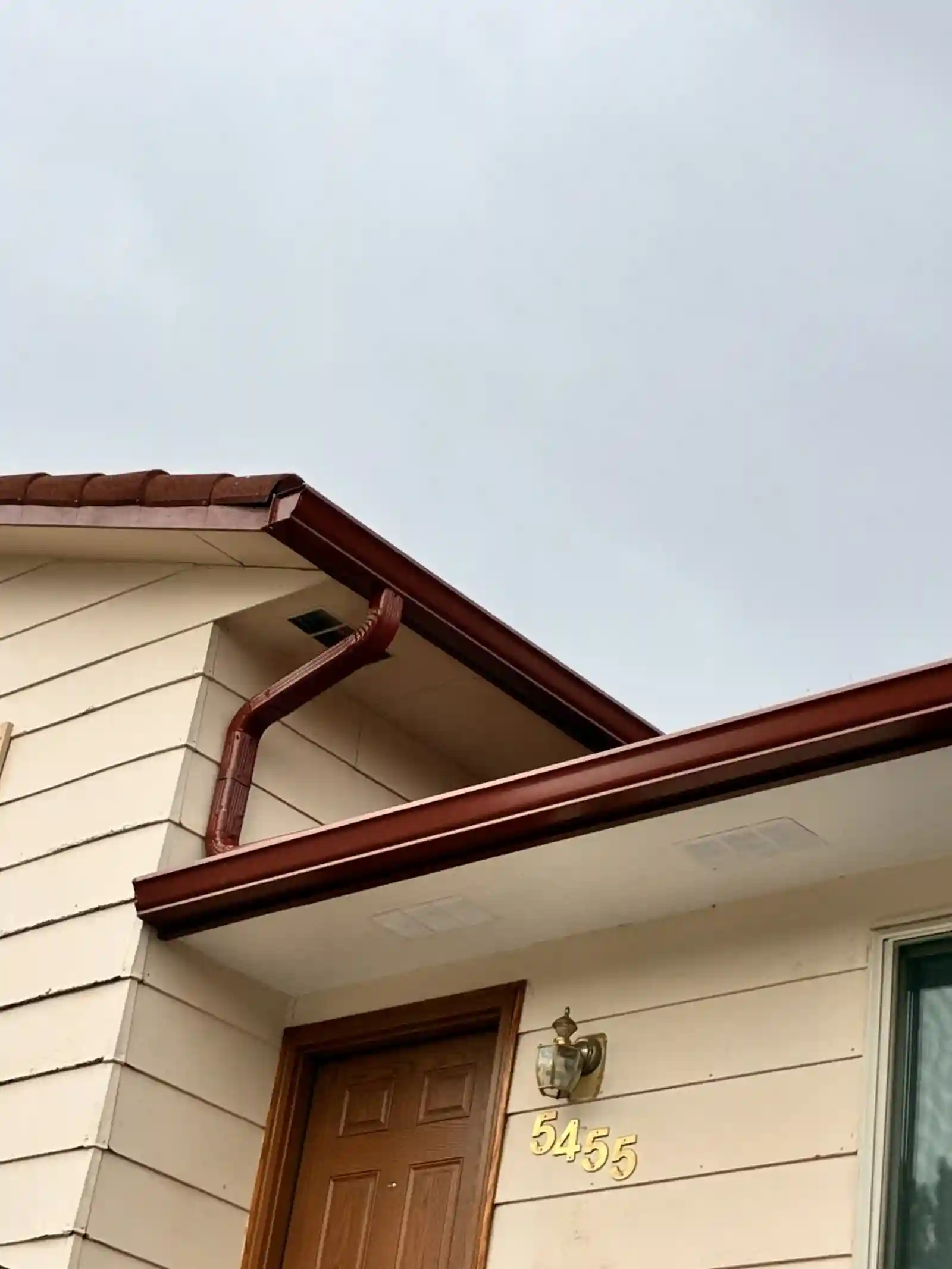
Soffit and fascia are the parts of your roofline nobody thinks about until water gets behind them.
The fascia is the vertical board running along the edge of your roof — it's what your gutters bolt to. The soffit is the horizontal underside of your eaves, the surface you see when you stand next to the house and look up. Together they close in the roofline, ventilate your attic, keep animals out, and carry the entire weight of your gutter system.
Colorado wears them out faster than most of the country, and across the metro — Aurora, Arvada, Thornton, and Lakewood included — our soffit and fascia service sees the same patterns again and again. Here's how to catch it early and what fixing it costs.
What soffit and fascia repair costs in Colorado
Wood and composite replacement runs $20 to $35 per linear foot. Aluminum and steel wrap is priced per job, since the scope varies more.
The scope is what drives the total, and it ranges enormously. A single rotted board above a downspout that's been overflowing is a small job. A full-perimeter replacement on a two-story home is a different project entirely.
One structural detail that affects cost more than people expect: soffit can often be replaced without touching your gutters. Fascia cannot. The gutters mount directly to the fascia, so replacing fascia means taking the gutter system down and rehanging it. If your gutters are already near end of life, that's the moment to consider gutter replacement at the same time rather than paying to remove and reinstall a system you'll be replacing in two years anyway. If the boards are still sound and it's only a loose hanger or a separated seam, a straightforward gutter repair may be all it needs.
Worried About Your Roofline?
Get a free inspection and an honest read on what your soffit and fascia actually need — including whether it's one board or something larger.
"Repair" is usually a misnomer
Worth setting expectations. Fixing soffit and fascia almost always means replacing the sections that have failed, not patching them.
Wood that has taken on water and started to rot doesn't come back. Filler and paint over soft wood hides the problem for a season and lets it keep spreading into the sound material next to it. A contractor offering to patch rotted fascia is offering you a cosmetic fix on a structural component.
What varies is how much gets replaced — one board, one run, or the perimeter.
How to spot damage
Most of this is visible from the ground if you know what you're looking at.
- Peeling or bubbling paint along the fascia line. Paint fails from behind when moisture is in the wood, so bubbling is often the first outward sign of a problem that started months earlier.
- Visible rot, soft spots, or dark staining on the fascia board, particularly directly under gutter joints, downspout outlets, and roof valleys where water concentrates.
- Sagging or warping along the fascia line, or soffit panels that have dropped, separated, or bowed.
- Gutters pulling away from the house. This is the big one and it's frequently misdiagnosed. When a gutter sags and won't stay reattached, the usual cause isn't the gutter or the hangers — it's that the fascia behind it has gone soft and won't hold a fastener anymore. Reattaching a gutter to rotted fascia buys a few months.
- Water stains on the soffit underside, or daylight visible through gaps.
- Pest activity. Birds, squirrels, wasps, and bats get into attics through failed soffit. If you're hearing activity overhead, gaps in the soffit are the most common entry point.
- On the inside: stains at the top of exterior walls, or a musty smell in the attic, both suggest water is getting in at the roofline.
Why Colorado is hard on soffit and fascia
Altitude and UV. Denver sits at 5,280 feet, where UV exposure runs roughly 25 percent more intense than at sea level. That degrades paint, wood, and vinyl faster than national maintenance guidance assumes. A paint interval that would hold for eight years at sea level may not make it past five here, and once the paint film fails, the wood underneath starts taking on moisture.
Freeze-thaw cycling. Denver crosses the freezing point repeatedly through the winter — often within a single day. Water that gets into a crack, a nail hole, or an unsealed end grain expands when it freezes, opening the gap slightly, then takes on more water on the next thaw. Repeat that a hundred times a season and small openings become real ones.
Clogged gutters. The most common cause we actually see. An overflowing gutter doesn't send water out and away — it sends it over the back edge, straight down the fascia board it's mounted to. That's continuous saturation of the one piece of wood holding your entire drainage system up. Two or three seasons of it will rot a fascia board through.
Hail and wind. A hailstorm that damages your roof frequently damages the fascia and soffit too, and it's routinely missed on inspections because everyone's looking at the shingles. Wind-driven rain gets behind loose panels.
Ice dams. When ice builds at the eave, meltwater backs up behind it and gets forced under the shingle line and behind the fascia. This is a direct water intrusion path into the roofline.
Animals. Squirrels chew through compromised soffit to get into attics, and once one gets in, the opening stays open.
Why it matters more than it looks
Two reasons beyond curb appeal, and both are expensive.
Your attic breathes through the soffit. Soffit vents are the intake side of your attic ventilation — air enters low at the eaves and exits high at the ridge. When that airflow is blocked by failed panels, blown insulation covering the vents from inside, or paint sealing the perforations, the attic loses its ability to regulate temperature and moisture.
That has a direct consequence in a Colorado winter. A poorly ventilated attic runs warm, warm attics melt roof snow from underneath, and that meltwater refreezes when it reaches the cold overhang at the eave. That's an ice dam — and once it forms, water pools behind it and pushes back under the shingles and behind the fascia. Which damages the soffit further. Which makes the ventilation worse.
If you have recurring ice dams, the soffit vents are one of the first places to look.
Your gutters hang on the fascia. The fascia board is the structural anchor for your entire drainage system. Let it rot and the gutters lose their attachment point, start to sag, stop draining properly, and eventually pull away — sending water down the wall and to the foundation, which is the single most expensive place water can end up in Colorado's expansive clay soils.
The sequence runs one direction and then loops: clogged gutters rot the fascia, rotted fascia drops the gutters, dropped gutters dump water at the foundation.
Catching it at the cheapest moment
The least expensive time to find soffit and fascia damage is during work you're already having done.
A crew on a ladder at every corner of your roof for a gutter cleaning is looking directly at the fascia board from a foot away. That's the best inspection your roofline will get all year, and it costs nothing extra. Same during a gutter installation — the fascia is fully exposed with the gutters off, and any rot has to be addressed before the new system goes up anyway.
This is a large part of the argument for having gutters cleaned professionally rather than doing it yourself — and once you know what gutter cleaning costs, that inspection reads as a bargain. The cleaning is the same either way. What differs is whether anyone recognized the soft spot in the fascia while it was still one board.
Preventing it
- Keep the gutters clear. Overflow onto the fascia is the leading cause we see. Two to three cleanings a year in this market.
- Consider guards if you're under heavy tree cover. Reducing clog frequency directly reduces overflow, which directly reduces fascia exposure. Here's what gutter guards run in this market.
- Keep the fascia sealed and painted. At Denver's UV levels, repaint on a shorter interval than national guidance suggests, and pay attention to end grain and cut edges.
- Make sure downspouts actually discharge away from the house. Four to six feet minimum, onto ground that slopes away.
- Keep soffit vents clear — from outside and from inside the attic, where blown insulation frequently ends up covering them.
- Trim branches back off the roofline. Limb contact abrades finish and gives animals a bridge.
- Look at the roofline after hail. It's the part everyone skips while assessing the shingles.