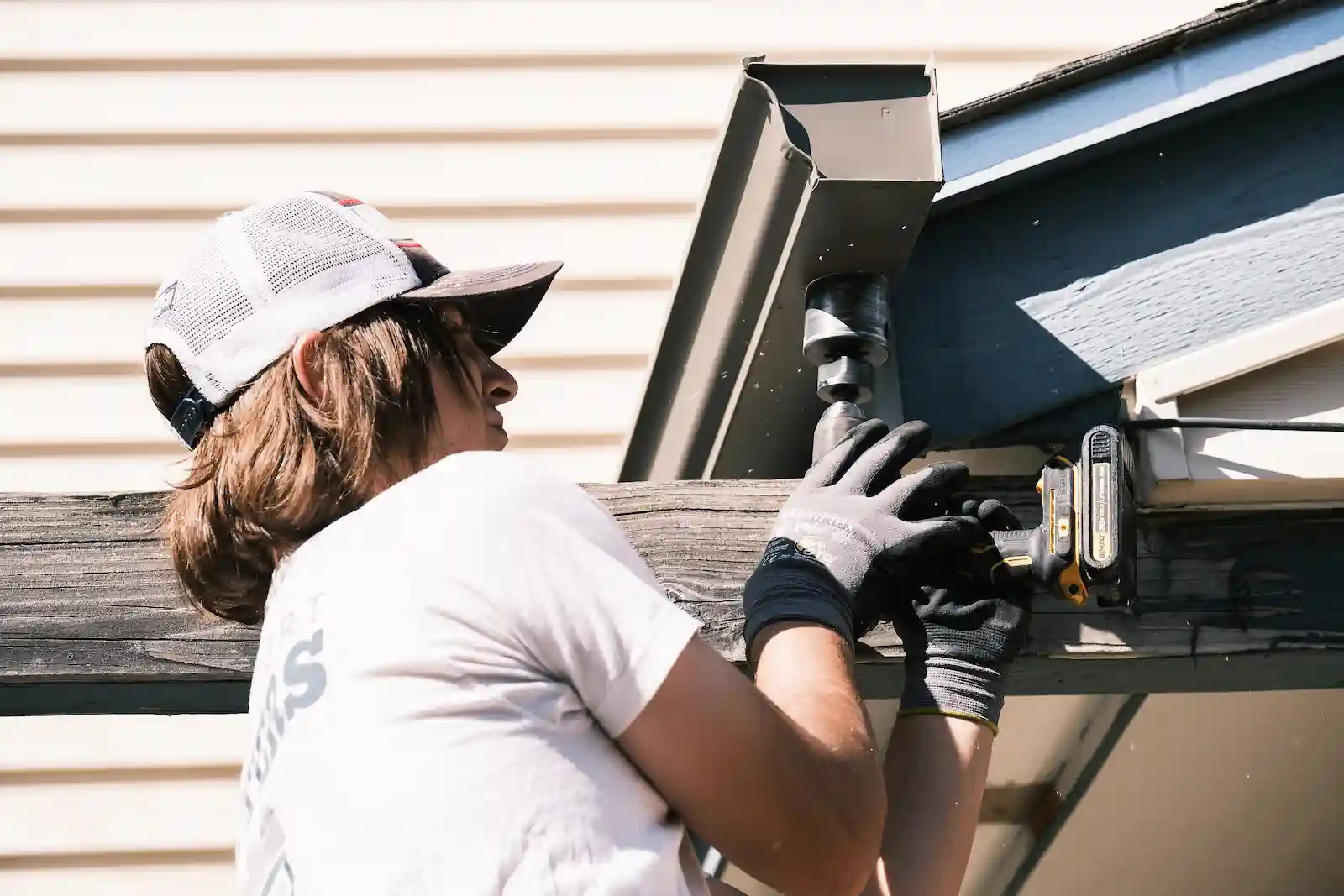
New gutters on a Denver home come down to two numbers: how much linear footage runs around your roofline, and what material you put up there.
Our most common system — 5-inch K-style seamless aluminum with 2x3-inch downspouts — runs $8 to $15 per linear foot installed. For most Colorado homes, a complete gutter and downspout replacement lands between $2,500 and $3,500. Steel costs more and handles heavier snow load. Specialty profiles step up from there. Copper sits at the premium end.
This guide covers what's in those numbers, how to tell whether you need replacement or another repair, and what to make sure is included in any bid you're comparing. It reflects how we price gutter installation and replacement across Denver, Aurora, Arvada, Littleton, and the surrounding metro.
What new gutters cost in Denver
Full project range for a typical Colorado home: $2,500 to $3,500. Larger homes, complex rooflines, and premium materials go higher.
The per-foot figure covers the gutter itself. A complete project also includes the downspouts, removal and disposal of the old system, and any extensions needed to carry water clear of the house — which is why it's worth looking at the whole project number rather than just the per-foot rate when you're comparing bids.
Get a Fixed-Price Quote
Tell us about your home and we'll scope your exact footage and give you a fixed price before any work starts.
Repair, replace, or install new
Three different situations, three different answers.
If you have gutters and something's wrong with them, most problems are genuinely repairable and a gutter repair is often the smarter dollar. Repairs typically run $100 to $900. Leaks, a sagging run, a separated seam, hail damage to a section — these are fixable.
The line to watch: when a repair would cost 30 to 50 percent of replacing the system, replace it. Past that point you're paying to patch gutters that will need the next repair soon, and you've spent replacement money in installments without getting a new system.
If you're replacing, the signals are usually clear:
- Rust, holes, cracks, or splits along the run
- Sagging that returns within months of being reattached — this almost always means the fascia behind the gutter has rotted, and no amount of reattaching fixes soft wood
- Standing water after a storm that cleaning doesn't resolve, which points to a pitch problem
- Peeling paint, staining, or mildew on the siding below the gutters
- Gutters past about 20 years old
- A system that has needed repairs more than once every year or two
Aluminum gutters typically last 20 to 30 years and copper well beyond that, so age alone is a fair part of the decision.
If you're installing on a home that doesn't have gutters, or adding to an addition, new construction, or a section that was never covered, you're looking at the same per-foot pricing without the removal and disposal line. The scoping work is actually more involved on a first install than a replacement, because there's no existing system to tell you where the water has been going. Downspout placement, drainage direction, and sizing all get decided from scratch based on your roof area and pitch.
What drives your number
Material. Aluminum is the best value for most Denver homes — it doesn't rust, it handles our temperature swings, and it's the standard for a reason. Steel costs more and is the better call under heavy snow load or where impact resistance matters. Copper is a longevity and appearance decision, not a performance one, and it's priced accordingly. There's a fuller breakdown on choosing between aluminum, steel, and copper, and if you want to cut down on future cleanings it's also worth weighing gutter guards while the crew is already up there.
Linear footage. More roofline means more gutter to fabricate and hang. This is the biggest single variable and it's why square footage alone doesn't predict cost.
Profile and size. Stepping up to 6-inch gutters or a box profile raises both the cost and the capacity. On a large or steep roof that sheds a lot of water fast, the larger profile isn't an upgrade so much as correct sizing — an undersized gutter on a big roof overflows no matter how clean it is.
Downspouts and drainage. Downspout count and placement are a real share of the total, and they're what actually determines whether water ends up several feet from your house or against it. This is not optional detail on Colorado's expansive clay soils, where water pooling at the base of a foundation can move it over time.
Stories and roofline complexity. Two-story work and multi-valley rooflines add labor and safety time to the same footage.
Fascia condition. This is the line item that surprises people. Rotted fascia behind old gutters has to be replaced before new ones go up, because the fascia is what the entire system hangs on. If the wood is soft, budget it separately — our soffit and fascia crews handle that, and this guide on what soffit and fascia work costs covers the pricing.
Why seamless
Sectional gutters come in pre-cut lengths joined together on site. Every joint is a seam, and every seam is a place that will eventually leak. Seamless gutters are fabricated on site from a continuous coil, cut to the exact length of each run, so the only joints in the system are at corners and outlets.
In a climate that cycles above and below freezing repeatedly through the winter — which is most of Denver's cold season — that difference matters more than it does in a milder market. Every freeze-thaw cycle works on a seam. Fewer seams, fewer failure points.
That's why the fabrication happens at your house rather than at a warehouse.
What a full replacement should include
When you're comparing bids, confirm all of this is in the number:
- The gutters themselves
- All downspouts — a real share of the total, and one of the more common places a cheaper bid quietly comes up short
- Removal and disposal of the existing system
- Downspout extensions carrying water clear of the foundation
- Hangers and fasteners appropriate to the fascia
- Any fascia repair required before installation, priced as a visible line item rather than discovered mid-job
A bid that looks meaningfully cheaper than the rest is usually cheaper for a reason, and downspouts are the most common reason.
Permits, insurance, and warranty
Permits. In most Colorado municipalities, gutter replacement doesn't require a building permit. It's not treated the way roofing is.
Insurance. Homeowners policies often cover gutter replacement when the damage comes from a covered event — hail being the obvious one in this market. Normal wear and age-related failure aren't covered. If you've taken a significant hail hit, it's worth a call to your carrier before you pay out of pocket, and worth having the damage documented.
Warranty. Our installations carry a 2-year workmanship warranty on labor and installation. Materials carry their own manufacturer warranties, typically 20 to 40 years depending on the product. Worth noting on the workmanship side: storm damage, acts of God, and work performed by other contractors aren't covered, and gutters installed beneath solar panels are excluded.
How long it takes
Most residential replacements are a one-day job. Larger homes or projects that include fascia work can run two. Because the gutters are fabricated on site, there's no lead time waiting on a materials order to arrive cut to length.
Once your new system is up, a schedule of routine gutter cleaning keeps it draining and protects the warranty. For apartment buildings, retail, and other larger properties, our commercial gutters team scopes the same work at building scale.